


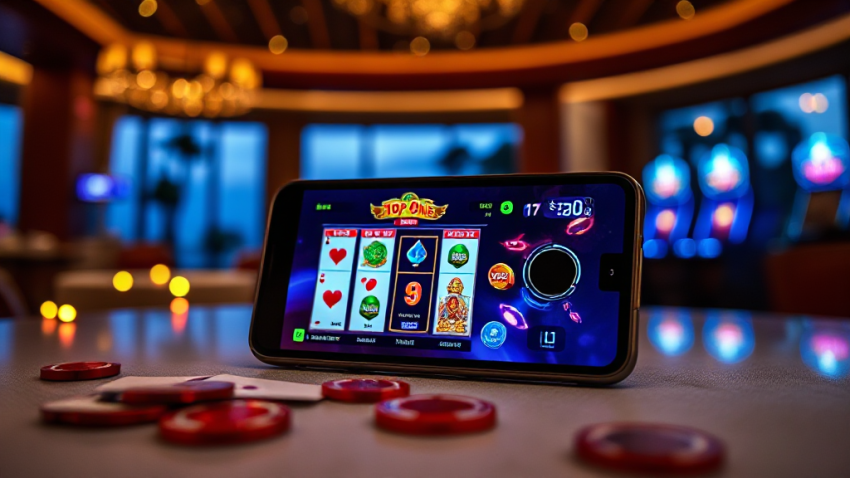
One Evening on TopOne Game: Slots, Teen Patti and a Live Table in Real Time
One Evening on TopOne Game: Slots, Teen Patti and a Live Table in Real Time
At 7:40 pm the phone was face-down on the kitchen counter, next to a half-empty glass of water and a stack of unopened mail. Priya, a 34-year-old logistics coordinator who asked that only her first name be used, had already decided once that evening not to play. She had opened the TopOne Game app on the walk home from the train, looked at the lobby, and closed it again. Now the phone buzzed with a Telegram notification from a group she had joined months ago, and she picked it up. This is the part of the story that matters, because it is the part most gaming coverage skips: the decision point. The app was there. The evening was free. Nothing forced her hand. She tapped the icon anyway.
What follows is a reconstruction of one ordinary weeknight session, told in the order it happened, based on a detailed account Priya kept in a notes file over several evenings. It is not a highlight reel. There were small wins, a slow leak, one genuinely tense hand, and a logout time she had chosen before she ever opened the app. If you have ever wondered what a real-cash gaming session actually looks like when nobody is selling you anything, this is a fair approximation. The short version is that no one fun session looks glamorous up close, and that is precisely why the timeline is worth walking through slowly.
7:40 pm — The Kitchen Counter Decision
Priya’s rules were written down, which is unusual and probably the reason the evening stayed boring in the best sense. Three rules, kept in the same notes file as her grocery list: a hard budget of 2,000 rupees for the month, a stop time of 10:30 pm on weeknights, and no deposits after 9 pm. She had added the third rule after a Tuesday in September when a late top-up turned into a late night.
She opened the app and checked the balance first, before the lobby. This ordering matters more than it sounds. Opening the lobby first means the first thing you see is a promotion, a jackpot counter, or a game tile with a number on it. Opening the balance first means the first thing you see is your own limit. The balance was 640 rupees, which is not a lot but is also not nothing. She had 12 days left in the month and roughly a third of her budget remaining, so the math said a short session was fine. The math did not say a long one was.
She pulled up the Telegram channel the app uses for support and announcements, skimmed two messages, and closed it. Nothing urgent. No bonus she needed to claim before midnight. This is the quiet administrative layer of real-cash gaming that rarely makes it into descriptions of the hobby: checking the support channel, confirming there is no time-limited offer demanding action, and then ignoring it. Priya’s view is that a bonus you chase is a bonus that costs you more than it pays. She claims what lands in her account and lets the rest expire.
At 7:52 pm she opened the slots section. The decision to start with slots rather than cards was deliberate. Slots are fast, require no opponents, and are easy to leave. Teen Patti, her preferred game, has a social pull that makes stopping harder, so she uses it as the second act, not the first.
8:05 pm — Slots as a Warm-Up, Not a Plan
Priya plays slots the way some people read the news: in short bursts, with low expectations, and with a clear end point. Her session budget for the slot block was 200 rupees. She chose a three-reel game with a low minimum bet, set the bet size to the smallest option, and started spinning. The reels moved. Most spins returned nothing. A few returned less than the stake. One returned about four times the bet, which brought her roughly back to where she started.
This is the honest texture of slot play for a casual adult player: long stretches of nothing punctuated by small recoveries. The entertainment is in the anticipation, and the cost is the difference between what you put in and what comes out. Priya’s slot block ended at 8:19 pm with a balance of 585 rupees, down 55 from the start. She had spent 14 minutes and about the price of a coffee. She rated that a fair trade and moved on without a second thought, which is the entire point of keeping the block small.
It is worth naming what did not happen here. No jackpot. No near-miss story worth retelling. No adrenaline spike that made her double her bet. The slot experience that most players actually have, most of the time, is closer to a slow shuffle than a fireworks display. The games on the platform include a range of reel formats, and the lobby does its best to make each one look like the one that will change your night. Priya’s habit is to pick the least flashy option on the screen, on the theory that the flashiest tile is flashy because it needs to be.
At 8:20 pm she made tea. The phone stayed on the counter, screen locked. This break is not incidental. It is the single most effective tool in her kit, because it interrupts the momentum that builds when one game ends and the next begins within two taps.
8:40 pm — Teen Patti and the Social Pull
Teen Patti is where the evening got interesting, and where the discipline got tested. The card game is familiar to anyone who grew up playing it at family gatherings: three cards, blind and seen rounds, a pot that grows as players call and raise. Online, the pace is faster and the table is quieter, but the psychology is the same. You are not playing against a machine. You are playing against people who are also deciding whether to stay.
Priya joined a low-stakes table at 8:43 pm with a buy-in of 200 rupees. Six players. She played tight for the first ten hands, folding early, watching how the table moved. Two players were aggressive, raising blind almost every round. One was passive and folded to any raise. The other three, including Priya, played in the middle. By 9:05 pm she was up about 90 rupees, mostly from two hands where her pair of kings held against a chasing draw.
Then came the hand she remembered. She was dealt ace-king-queen, a strong holding but not a monster. The aggressive player to her left raised blind. She called. Two others folded. The flop of the round brought no improvement, and the raising continued. This is the moment where a session can turn: the pot is large enough to matter, the hand is good enough to continue, and the rational move and the emotional move start to diverge. Priya called two more rounds and lost to a player holding three low cards that had paired on the final round. The pot was 380 rupees. She was back to roughly even for the Teen Patti block, and down for the night.
She sat out the next three hands. That pause, she said later, was the most valuable decision of the evening. Not because the cards would have gone badly, but because the urge to win it back immediately is the urge that ends budgets. She watched the table, drank her tea, and let the feeling pass. By 9:30 pm she had recovered about 60 rupees on two small pots and decided the card block was done. Balance: 610 rupees. Essentially flat for the night, with 90 minutes gone.
Her note on Teen Patti is worth quoting because it captures something true about card games generally: the game rewards patience more than aggression, but the interface rewards aggression more than patience. The raise button is bigger and brighter than the fold button on most tables. Learning to press the smaller button is most of the skill.
9:45 pm — One Live Table, Then the Phone Goes Down
The live casino section was the last stop, and Priya treats it as a treat rather than a habit. Live tables are slower, more expensive at the minimum, and more social than either slots or Teen Patti, because there is a dealer on screen and other players in the chat. She joined a live table at 9:48 pm with a 150-rupee buy-in and a self-imposed limit of fifteen minutes.
The table was a card game with a live dealer, which is the format she prefers over the wheel games because the pace is human. The dealer dealt, the chat scrolled with greetings in three languages, and Priya placed small bets for eight rounds. She won two, lost five, and pushed one. At 10:04 pm she was down 80 rupees and her timer had run out. She left the table mid-shoe, which felt rude for about two seconds and then felt fine.
This is the part of the evening that a marketing page would cut, and it is the part that makes the whole session sustainable. The live table was the most enjoyable block of the night and the least profitable. Enjoyment and outcome are not correlated in real-cash gaming, and treating them as if they are is how players get into trouble. Priya closed the app at 10:07 pm with a balance of 530 rupees, down 110 for the evening, and logged the number in her notes file. The note read: “Down 110. Fine. Slots were boring, Teen Patti was good, live table was fun. No deposit. Back tomorrow maybe.”
She did not open the app again that night. The phone went on the charger at 10:20 pm, and the kitchen counter was clear by 10:30. The whole session, start to finish, was two hours and twenty-seven minutes, and the total cost was roughly the price of a modest dinner. That is the shape of a real evening on a platform like this one, and it is worth comparing against the version of events that promotions tend to imply.
The bigger picture is that platforms in this category, including the one Priya uses, offer a spread of formats: reel games, card games, and live-dealer tables, with an APK download for Android users, a login flow, and a bonus system that runs alongside the games. The top one thing about a session like Priya’s is not any single game. It is that the session had a beginning, a middle, and an end that she chose. The app made all three easy to find, and that ease cuts both ways: it is easy to start, and it is also easy to stop, provided you decided to stop before you started.
For adults who play, the lesson from this one evening is not that any particular game is better or worse. It is that the timeline is the product. A session with a budget, a clock, and a planned logout is a different activity from a session without them, even if the games, the stakes, and the outcomes are identical. Priya’s evening was unremarkable by design, and unremarkable is the goal. The top one game on any given night is the one you can walk away from without regret, and the best game is the one that fits inside the time and money you already decided to spend. She logged out at 10:07 pm. The kitchen light went off at 10:30. That is the whole story, and it is a better one than the alternative.




Leave a Reply